becomes
Josh Ghent (opens on the publisher’s site)
joshghent.com
Why this topic matches
- heuristic “becomes” via Published content Source page (opens on the publisher’s site)
- heuristic “becomes” via Published content Source page (opens on the publisher’s site)
- heuristic “becomes” via Published content Source page (opens on the publisher’s site)
- heuristic “becomes” via Published content Source page (opens on the publisher’s site)
-
Demystifying the principles behind the title.
-
Mistakes and pitfalls that I fell into when learning to become a software developer.
-
A letter to my 17-year-old self on how to become a software developer.
Josh Müller (opens on the publisher’s site)
joshmuller.ca
-
I’ve been pondering generosity a lot lately. There’s a lot going on in the world to make one feel lack . Natural disasters, economic crisis, war, huge accidents resulting in ecological devastation, bank collapses, unemployment threats and spikes due to new unprecedented technologies… And that was just these last 3 months. It can be tempting to become stingy in the face of such s
-
Nutritionally, the idea is fairly intuitive: Eat junk, and our bodies reflect that we’ve been eating junk. Eat clean, and our bodies eventually look more lean. Too rarely do we let that idea jump from body to mind, but that’s an apt and important jump. Cognatively, we are what we consume: what we watch, read, listen to, and think. Is your informational diet helping you become who you w
-
Update — September 2022: Technology apparently changes FAST. Many specific tips and techniques in this guide have become out dated since I first wrote it in 2020. İf there is something here you’ve tried that’s not working, message me about what you’re wanting to do, and I’ll be glad to help… And maybe I’ll update that section of the guide at the same time. 😅 “


Joshua Morris (opens on the publisher’s site)
joshuamorris.info
Why this topic matches
- heuristic “becomes” via Published content Source page (opens on the publisher’s site)
- heuristic “becomes” via Published content Source page (opens on the publisher’s site)
- heuristic “becomes” via Published content Source page (opens on the publisher’s site)
- heuristic “becomes” via Published content Source page (opens on the publisher’s site)
-
Opera HTML-in-Canvas puts live DOM into WebGL and WebGPU scenes. Why that matters for playful—and practical—web experiments.
-
A nineteen-year-old paid one girl's school fees in a Tanzanian village, then kept the promise long enough for her to graduate from university.
-
Voyager's Emergency Medical Hologram remains one of the best stories about a tool that becomes something more — and why that question still matters for AI.
-
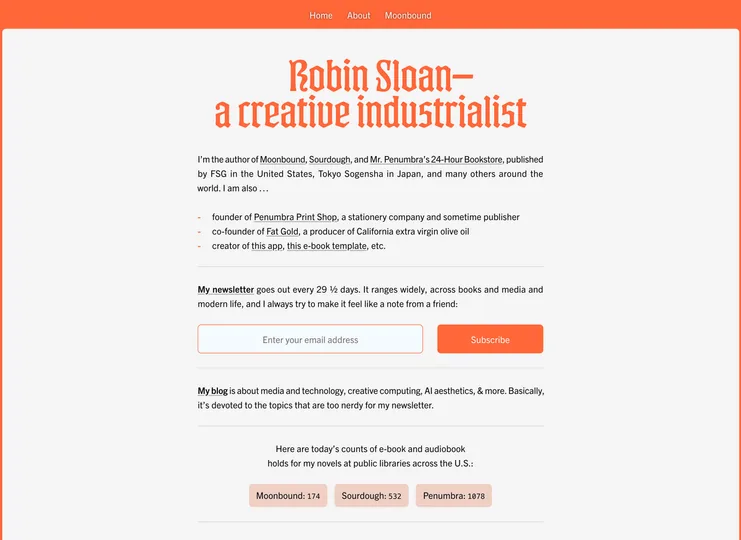
Robin Sloan's website shows what a personal site can become when somebody keeps making, experimenting, writing, and tending the same piece of the web.
-
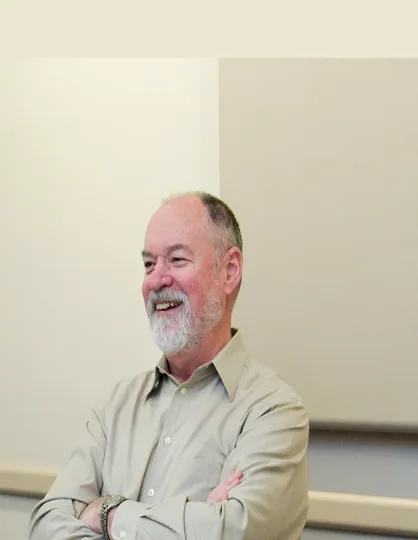
Jan Conroy hired me at UC Davis when I was not the obvious candidate. He looked at curiosity instead of the résumé, then helped me become a better version of myself.
-
The New York Times and Slashdot on Samuel Tunick—GrapheneOS duress at CBP Atlanta, a § 2232(a) felony, and whether using a privacy tool during a disputed search can itself become the crime.
-
July lost 23,000 payroll jobs and prior months were revised lower, yet unemployment fell to 4.1% as participation dropped—a hiring crisis masked by a lower breakeven job-creation threshold and people leaving the labor force.
-
John Naughton warns that AI gains may concentrate among owners while workers face displacement. Early adoption can freeze headcount, but if AI becomes ordinary infrastructure, larger AI-assisted teams may eventually have more leverage—and the real fight is over who captures the rewards.
-
Houston-area agencies are investigating officers accused of using Flock’s license plate database for personal stalking, while the Institute for Justice has documented at least 28 ALPR misuse cases—showing audit logs do not prevent abuse when nobody reviews them.
-
GrapheneOS responds to prosecution involving its duress-password feature by stating that creating and using the OS is legal and constitutionally protected—arguing privacy tools need funding, legal durability, and a nonprofit structure that can protect contributors when the software becomes inconvenient.
-
LetsSeal is an open-source tool that creates cryptographic seals so anyone can verify a file has not changed since it was published—arguing authenticity often matters more than secrecy, especially as software supply-chain attacks become more common.
-
Adam Langley’s ImperialViolet post on LLMs proving Lean properties for a Zstd decoder piece—arguing formal verification’s cost curve may flip, so the scarce skill becomes precise specs while the type checker judges the rest.
-
Instagram will remove Meta smart-glasses videos used to harass, exploit, or secretly record people for prank and “pickup” content—an admission that one of the most visible uses of Meta’s hardware has become filming unsuspecting people for viral attention.
-
Not everything needs to become a product or attract an audience. Make things carefully, share what you learn, help others build, and begin again when life interrupts the work.
-
Truth Social plans to sell banks and trading firms the fastest access to the president’s market-moving posts. Public presidential announcements should not become a premium product that enriches a business tied to the office.
-
Recurring major outages raise a harder question than home batteries: how a wealthy nation treats public infrastructure failure.
-
Compatibility features that make old protocols work can also open paths through network protections we assume are already solid.